
13 Proven Ways to Improve Insulin Sensitivity Naturally
If you feel like you are doing everything right and your weight or energy still will not budge, your insulin sensitivity may be the missing piece.
Learning how to improve insulin sensitivity naturally is one of the highest-leverage things you can do for steady energy and easier weight management. Most of it costs nothing.
Insulin sensitivity is how well your cells respond to insulin. When sensitivity is high, your body needs only a small amount of insulin to manage blood sugar. When it drops, a state called insulin resistance, your body pumps out more and more insulin, which keeps fat storage switched on and fat burning switched off.
After a heart attack in 2019, I had to figure out insulin control for real. This guide is what actually came out of that: 13 approaches I found genuinely worth the effort, ranked honestly, foundations first and supplements kept in their proper place.
What Insulin Sensitivity Actually Is
Insulin is the hormone that lets glucose move out of your bloodstream and into your cells for energy or storage. Think of it as a key that unlocks your cells. Insulin sensitivity describes how well that key works.
When your cells are sensitive, a small amount of insulin does the job efficiently. When they become resistant, the lock gets stiff. Your pancreas compensates by producing more insulin, and chronically high levels keep your body in fat-storage mode. Over time this pattern raises the risk of prediabetes and type 2 diabetes.
The encouraging part is that insulin sensitivity responds fast to how you live. The CDC estimates more than 1 in 3 American adults has prediabetes, and most do not know it. Lifestyle change remains the single most effective way to reverse the trend. You have more influence here than almost anywhere else in your health.
If you want the bigger picture of how insulin drives weight, start with our complete guide to insulin and weight loss.
The Foundations That Move the Needle Most
Before any supplement, these are the levers with the strongest evidence and the biggest payoff. If you do nothing else on this page, do these.
1. Build and Use Muscle

Muscle is your largest glucose sink. The more you have, and the more you use it, the more glucose your body clears without needing extra insulin. Resistance training is especially powerful here.
In a randomized controlled trial of resistance and endurance training, both forms of exercise improved glucose disposal in young women, with resistance training adding benefit largely through increased muscle mass. A larger 8 month STRRIDE trial in overweight adults found that combining aerobic and resistance training produced the greatest improvements in insulin action.
Why does muscle matter so much? Skeletal muscle is the largest site of insulin-stimulated glucose disposal in the body. Build more of it and contract it regularly, and you create more storage space for glucose, plus more demand to use it. Both reduce how much insulin your body needs.
Exercise also triggers glucose uptake through GLUT4, a transport protein in muscle cells that pulls glucose from the blood without requiring much insulin at all. That means your muscles can absorb glucose during and after activity even without a big insulin signal.
You do not need a gym to start. Two or three short strength sessions a week, bodyweight squats, push-ups, and a few dumbbell moves are enough to begin shifting the dial.
Combine that with a couple of brisk walks or bike rides, and you cover both the muscle-building and glucose-clearing angles.
Consistency beats intensity here. A sustainable routine you will actually keep doing outperforms an ambitious plan you abandon in three weeks.

2. Walk After Meals
A 10 to 15 minute walk after eating is the highest-return, lowest-effort habit I added to my own routine. Light movement helps your muscles soak up glucose, blunting the post-meal spike that otherwise demands a surge of insulin. It costs nothing, needs no equipment, and works every time.
3. Space Out Your Meals
When you eat constantly, three meals plus snacks from waking to bedtime, insulin never gets a chance to fall. Each time you eat, insulin rises to handle the incoming glucose. Stack eating events too close together and your baseline never returns to a true resting low.
Time-restricted eating and gentle fasting lower your baseline insulin by creating real gaps between meals. Those gaps are when your body shifts back toward burning stored fat.
This was the single change that moved my own numbers the most. Lengthening the window between my last meal and my first, not cutting any one food, is what finally pulled my fasting glucose down. A simple 12 to 14 hour overnight fast is a sensible starting point. You can extend toward a 16:8 pattern later if it suits you and your doctor agrees.
The mechanism matters more than the clock. The goal is not hitting a magic number of fasting hours. It is stopping the all-day insulin drip that keeps your cells swimming in the hormone. Even modestly compressing your eating window helps. For a beginner-friendly walkthrough, see our guide to intermittent fasting 101.
4. Cut Refined Carbs and Added Sugar First
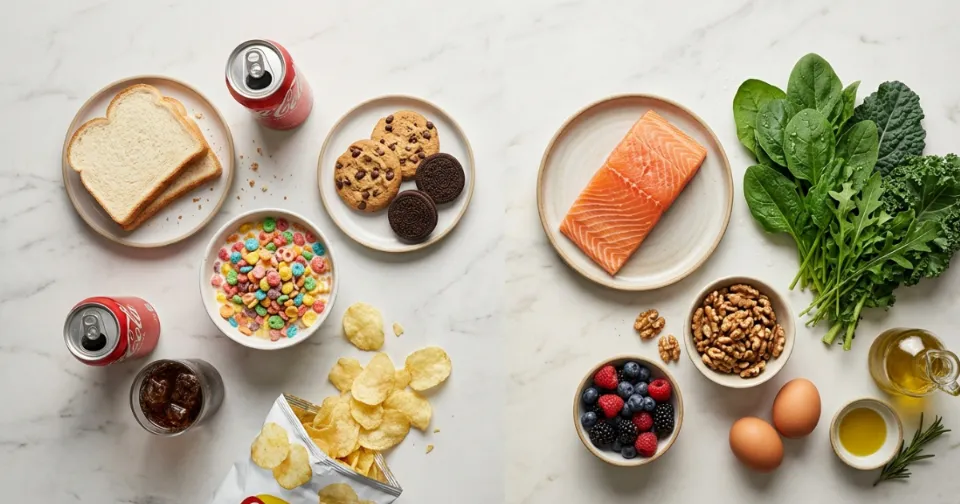
Refined carbohydrates and added sugars cause the sharpest blood sugar spikes, which drive the biggest insulin responses. Cutting these is usually the fastest dietary win. You do not need to go zero carb. Focus first on removing sugary drinks, sweets, and ultra-processed snacks, and lean on whole foods instead.
The practical version: swap the soda for sparkling water, the breakfast pastry for eggs or Greek yogurt, and the afternoon candy for nuts or fruit. You are not banning carbohydrates. You are trading the fast-digesting, spike-inducing ones for slower, fiber-rich sources like vegetables, legumes, and intact whole grains. Those still contain carbs, but they release glucose gradually, so your insulin response stays gentler.
One rule does a lot of the work for you: never eat carbs naked. Pair them with fat, fiber, or protein. Rice with olive oil and vegetables. Toast with eggs and butter. Fruit with almond butter. This turns a sharp glucose spike into a gradual curve, and it can cut the insulin response by 30 to 40 percent per meal.
5. Prioritize Sleep
Sleep is not optional for metabolic health. Even a few nights of short sleep measurably worsen insulin sensitivity. Your hunger rises and your glucose control slips. Aim for seven to nine hours on a consistent schedule.
Our deep dive into how sleep affects metabolic health covers the mechanisms in more detail.
6. Eat Fiber and Protein Forward
Soluble fiber slows digestion and the release of glucose into your bloodstream, which softens the insulin response. Protein improves satiety and helps preserve muscle. Build meals around vegetables, legumes, nuts, seeds, lean protein, and healthy fats, and the spikes take care of themselves.
Order matters too. Eating vegetables first, before protein and carbs, gives fiber a head start slowing digestion. A study in Diabetes Care found this sequencing can reduce post-meal glucose spikes by up to 30 percent. No willpower required, just rearranging what is already on your plate.es.
7. Manage Stress and Cortisol

Chronic stress is an underrated driver of insulin resistance. When you are stressed, your body releases cortisol, which raises blood glucose to fuel a fight-or-flight response. That is useful in a genuine emergency. When stress is constant, persistently elevated cortisol keeps glucose, and therefore insulin, higher than it should be.
You cannot eliminate stress, but you can blunt its metabolic impact. Regular movement, adequate sleep, and simple practices like deep breathing or a daily walk all lower cortisol over time. Our article on cortisol and belly fat goes deeper on the stress-hormone connection, and why stubborn abdominal fat is often a cortisol story as much as a calorie one.
8. Reach a Healthy Weight
Excess fat, particularly around the abdomen, is closely tied to insulin resistance. The good news: you do not need dramatic weight loss to benefit. Losing even 5 to 7 percent of your body weight meaningfully improves insulin response and lowers type 2 diabetes risk, a target that is realistic for most people.
A Few More Levers Worth Adding
These three are not foundational on their own, but they stack well with everything above and cost next to nothing.
Start your day with salted water. Mix a quarter teaspoon of pink Himalayan or sea salt into 16 to 20 ounces of room-temperature water and drink it within 30 minutes of waking, before coffee or food. Electrolytes support your cells’ glucose uptake, so you need less insulin to do the same job. It costs nothing and takes ten seconds.
Try strategic cold exposure. A 2 to 3 minute cold shower, or ice packs on the neck and upper back two or three times a week, activates brown fat and improves glucose disposal independent of diet. Start with 30 seconds at the end of a normal shower and build up. This is not about enduring discomfort. It is a small metabolic nudge.
Add green tea to your routine. Two to three cups a day, or a green tea extract if you do not enjoy the taste, provides EGCG, an antioxidant compound with modest but real evidence for improving insulin sensitivity. Results are mixed in the research, but it is low risk and pairs well with everything else on this list.
Supplements With Real Evidence
Supplements are the smaller lever, but a few have genuine evidence behind them. Here they are, strongest first. Treat these as support for the foundations above, never a replacement.
9. Berberine
Berberine is the most-studied natural compound for insulin sensitivity. It activates AMPK, an enzyme that helps regulate cellular energy use, which in turn improves glucose uptake.
In some clinical trials, berberine produced glucose-lowering effects comparable to metformin, though it is not a substitute for prescribed medication. Never stop a prescribed drug without consulting your doctor.
Berberine may cause mild digestive upset that usually settles within a few days. For the full breakdown of the research, see our dedicated guide: does berberine increase insulin sensitivity?
10. Magnesium
Magnesium is involved in hundreds of enzymatic reactions, including those that govern glucose metabolism. Deficiency is common, and a placebo-controlled trial in overweight, non-diabetic adults found that oral magnesium supplementation improved insulin sensitivity even in people without a diagnosed deficiency.
Better-absorbed forms include glycinate, malate, and citrate. A typical range is 200 to 400mg daily, often taken with dinner, which may also support sleep. Food sources include dark leafy greens, nuts, seeds, and legumes.
11. Omega-3 Fatty Acids
Omega-3s (EPA and DHA) help reduce inflammation and improve cell membrane health, which makes insulin receptors more responsive. A systematic review and meta-analysis found fish oil supplementation associated with improved insulin sensitivity, though the authors note the evidence is still developing and not every study agrees.
The best source is fatty fish. Aim for around 8 ounces per week, roughly two palm-sized servings. If you do not eat fish, a third-party-tested fish oil supplement at 1 to 2g EPA/DHA daily is a reasonable alternative, though whole fish also delivers vitamin D, selenium, and protein a capsule cannot replicate.
12. Alpha-Lipoic Acid, Chromium, and Ceylon Cinnamon
These three are modest helpers worth grouping together. A review of natural supplements for insulin sensitivity lists cinnamon and alpha-lipoic acid among compounds with promising, if still preliminary, evidence for reducing type 2 diabetes risk.
Alpha-lipoic acid is unusual in being both water and fat-soluble, so it works throughout the body to combat oxidative stress and support insulin signaling. Chromium is a trace mineral that may enhance insulin’s action and glucose uptake, though effects are modest.
Ceylon cinnamon may modestly support fasting blood sugar and insulin response. Choose Ceylon over Cassia, which is higher in coumarin and harder on the liver at higher intakes. Add it to coffee, yogurt, or smoothies. Consistency matters more than large doses.
13. Vitamin D and Apple Cider Vinegar
Two more evidence-backed additions round out the list. Vitamin D deficiency is linked to insulin resistance, though the research on supplementation itself is mixed. Rather than guessing, it is worth testing your level and supplementing only to correct a confirmed deficiency.
Apple cider vinegar may modestly improve insulin sensitivity and blunt post-meal glucose spikes when taken before carb-containing meals. See our guide on whether apple cider vinegar helps insulin resistance.
| Supplement | Evidence strength | Typical role |
|---|---|---|
| Berberine | Strongest | Primary supplement option |
| Magnesium | Strong (esp. if deficient) | Foundational mineral |
| Omega-3 | Moderate | Anti-inflammatory support |
| Alpha-lipoic acid | Moderate | Antioxidant support |
| Vitamin D | Moderate (if deficient) | Correct a deficiency |
| Chromium, cinnamon, ACV | Modest | Minor helpers |
An Honest Word on Supplements
Here is the part many supplement articles skip: no pill reverses insulin resistance on its own. Major health bodies do not recommend routine supplementation as a treatment, because the evidence for most supplements is small, short-term, and mixed.
That does not make them useless. Berberine and magnesium in particular have respectable support. But the durable change comes from the foundations. If you take medication, especially for diabetes or blood pressure, clear any supplements with your doctor first, since some can interact.
Be skeptical of any product marketed as a one-step insulin reset. The honest path is less exciting and far more reliable: move, eat whole foods, sleep, and let the right supplements play their supporting role.
How to Put It All Together
You do not need to do all of this at once. Here is a realistic sequence.
Weeks 1 and 2: lock in the foundations. Walk after meals, cut sugary drinks, protect your sleep, and start the morning salted water habit.
Weeks 3 and 4: add a 12 to 14 hour overnight fast and two short strength sessions a week.
Month 2: if you want supplement support, add magnesium first, then consider berberine. This is also a good time to try cold exposure a couple of times a week.
Ongoing: track something objective, fasting glucose in mg/dL, energy, and how you feel between meals, rather than relying on impressions alone.
Small, consistent changes compound. The goal is not perfection. It is a metabolism that works with you instead of against you.
Frequently Asked Questions
How long does it take to improve insulin sensitivity naturally?
Lifestyle changes can begin improving insulin sensitivity within a few weeks, though measurable changes in markers like fasting glucose often take 8 to 12 weeks of consistency. Sleep and post-meal walks tend to show the fastest subjective benefits.
What is the fastest way to improve insulin sensitivity?
Exercise, especially resistance training combined with post-meal walking, produces some of the quickest, most reliable improvements. Pairing movement with lower refined-carb intake and better sleep speeds results further.
Do supplements really improve insulin sensitivity?
Some do, modestly. Berberine and magnesium have the strongest evidence, but no supplement replaces diet, exercise, and sleep. Major health organizations do not recommend routine supplements as a standalone treatment for insulin resistance.
Can you reverse insulin resistance without medication?
Often, yes, especially when caught early. Losing 5 to 7 percent of body weight, exercising regularly, and improving diet can substantially improve or reverse insulin resistance. Work with your doctor, particularly if you take medication.
Is insulin resistance the same as diabetes?
No. Insulin resistance is an early, often reversible stage where cells respond poorly to insulin. Left unaddressed, it can progress to prediabetes and then type 2 diabetes, but improving it early can prevent that progression.
The Bottom Line
Learning how to improve insulin sensitivity naturally comes down to a handful of durable habits: build muscle, walk after meals, space out your eating, cut refined carbs, sleep well, and let a few evidence-based supplements play a supporting role. None of it is glamorous, but it works — and it’s the same approach I used to rebuild my own metabolic health.
Pick one change from this guide and start today. For your next step, read our complete guide to insulin and weight loss to see how these habits fit the bigger metabolic picture.