Insulin and Belly Fat: How It Drives Storage and How to Stop It
If your weight seems to settle around your middle no matter what you do, the hormone insulin is probably part of the story. The link between insulin and belly fat is one of the most important and most fixable relationships in metabolic health, yet it’s the one most people overlook while counting calories.
Here’s the short version: when insulin stays high, your body is locked in fat-storage mode, and the fat it stores preferentially lands around your abdomen. The good news is that this is a cycle you can interrupt.
After rebuilding my own metabolic health following a heart attack in 2019, understanding this was the turning point, it’s why the scale finally started moving in the right direction.
This guide explains exactly how insulin drives belly fat, why abdominal fat is uniquely stubborn and uniquely dangerous, and the specific, evidence-based habits that break the cycle.
How Insulin Stores Fat: The Body’s Energy Gatekeeper
Insulin is the hormone your pancreas releases after you eat. Its job is to move glucose out of your bloodstream and into your cells. Think of it as a gatekeeper deciding whether your body stores energy or burns it.
When you eat, blood glucose rises, and insulin rises with it. Insulin first tops up your glycogen stores (quick-access energy in your liver and muscles). Once those stores are full, the remaining excess is converted to fat for long-term storage, a process called lipogenesis. At the same time, high insulin actively blocks lipolysis, the breakdown of stored fat for fuel.
This is the part that matters for your waistline: as long as insulin is elevated, fat burning is switched off. Your body simply cannot access its fat stores while insulin is high. If you eat frequently throughout the day, meals plus snacks, insulin rarely falls, and your body spends most of its time storing rather than burning.
There’s a second, sneakier effect, too. When insulin is chronically high, it interferes with leptin, the hormone that tells your brain you’re full. The result is that you can feel hungry even shortly after eating, which leads to more eating, more insulin, and more storage. If you’ve ever wondered why you’re ravenous an hour after a big, carb-heavy meal, this insulin–leptin interplay is often the reason. It’s not a lack of discipline; it’s a hormonal signal being drowned out.
For a fuller primer on the hormone itself, see our beginner’s guide to how insulin works.
Why It’s Specifically Belly Fat
Not all fat is the same, and insulin has a particular relationship with the fat around your organs.
The fat stored deep in your abdomen, surrounding your liver, pancreas, and intestines, is called visceral fat. It’s metabolically different from the subcutaneous fat that sits just under your skin. Visceral adipose tissue is highly responsive to insulin, which means chronically high insulin levels drive fat storage in this region in particular.
That’s why so many people say “my weight goes straight to my stomach” or “I gain weight even when I don’t eat much.” It isn’t a character flaw or a willpower problem; it’s the hormonal environment directing where fat gets stored.
Visceral fat isn’t just a cosmetic concern. According to research summarized by the NIH, visceral fat is far more metabolically active and harmful than subcutaneous fat. It releases inflammatory chemicals and free fatty acids directly into the bloodstream and liver, raising the risk of type 2 diabetes, heart disease, and fatty liver.
The Vicious Cycle: Belly Fat Makes Insulin Worse
Here’s the part that makes abdominal fat so frustrating, and so important to address early: insulin and belly fat feed each other in a loop.
It works like this. High insulin promotes visceral fat storage. That visceral fat then releases inflammatory compounds and free fatty acids that interfere with insulin signaling, making your cells less responsive to insulin. Your pancreas compensates by producing even more insulin. And more insulin drives even more fat storage.
More insulin → more belly fat → more inflammation → worse insulin resistance → even more insulin. Round and round.
This is why the relationship is bidirectional, and why it’s worth being precise about it. Insulin isn’t the sole “cause” of obesity, and belly fat isn’t merely a symptom — each drives the other. The practical upshot is encouraging, though: because it’s a cycle, interrupting it at any point starts to unwind the whole thing. You don’t have to fix everything at once.
How to Know If Belly Fat Is a Problem for You
You don’t need a lab to get a useful read on visceral fat. Two simple measures help:
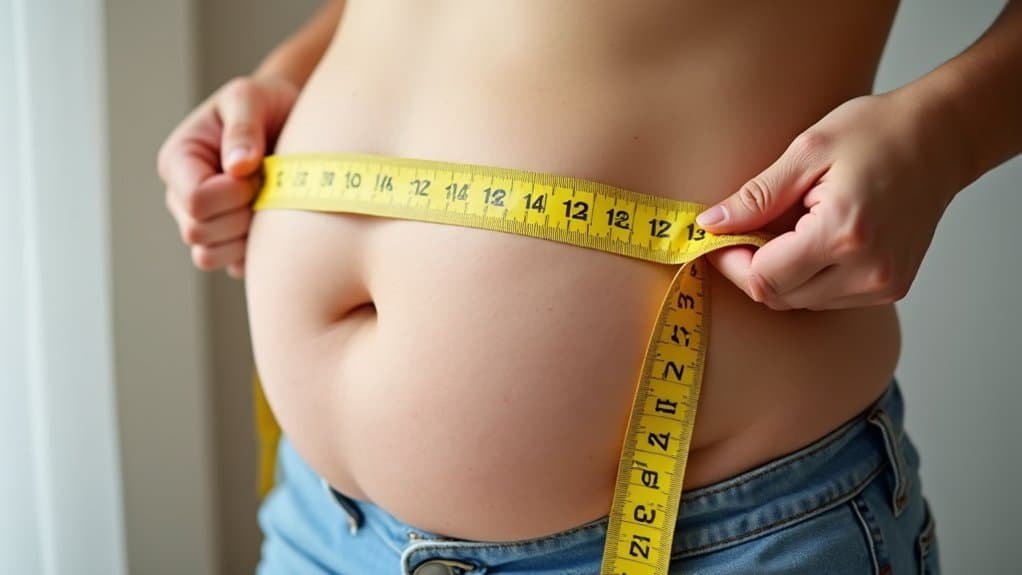
- Waist circumference. Measure around your middle at the level of your belly button. As a general guide, a waist over 40 inches in men or 35 inches in women signals higher visceral fat and metabolic risk. It’s a rough but genuinely useful number to track over time.
- Waist-to-hip ratio. Divide your waist measurement by your hip measurement. A higher ratio points to more abdominal fat relative to your lower body, the “apple” rather than “pear” pattern that’s more strongly tied to insulin resistance.
Neither number is about appearance. They’re proxies for how much metabolically active fat is sitting around your organs, which is what actually matters for your health.
If you track one thing alongside how you feel, a slowly shrinking waist is a better sign that insulin is coming down than the scale alone, because you can lose visceral fat while building muscle and see little change in total weight.
What Drives Insulin Too High in the First Place
If high insulin is the engine of belly fat, what keeps insulin elevated? Four main drivers, all of which you can influence:
- Refined carbs and added sugar. These cause the sharpest glucose spikes and the biggest insulin responses. Sugary drinks, sweets, white bread, and ultra-processed snacks are the usual culprits.
- Constant eating. Three meals plus snacks from morning to night means insulin never falls. The grazing pattern keeps you in storage mode all day.
- Poor sleep. Even a few nights of short sleep measurably reduce insulin sensitivity, pushing your levels higher.
- Chronic stress. Stress raises cortisol, which in turn raises blood glucose and insulin. Our guide on cortisol and belly fat explains this stress-hormone connection in depth.
How to Break the Insulin–Belly Fat Cycle
You can’t spot-reduce belly fat; no exercise burns fat from one specific area on command. But the research is clear and genuinely hopeful: when you lower insulin and lose weight overall, you lose a higher proportion of visceral fat than fat elsewhere. Belly fat is often the first to go, not the last.
Here are the levers that work, roughly in order of impact.
1. Move, Especially Strength Training
Exercise is uniquely effective against visceral fat. As Johns Hopkins Medicine explains, exercise works off belly fat in particular because it reduces circulating insulin and prompts the liver to burn nearby visceral fat deposits.
Diabetes Australia notes that exercise reduces visceral fat, even if you don’t lose weight, it’s about changing body composition, not just the number on the scale. Building muscle through resistance training increases your glucose “sink” and lowers circulating insulin. Combine moderate aerobic activity (brisk walking, cycling) with at least two strength sessions a week for the best results.
2. Walk After Meals
A 10–15 minute walk after eating helps your muscles pull glucose out of your bloodstream, blunting the post-meal insulin spike. It’s the highest-return, lowest-effort habit I added to my own routine — no equipment, no gym, and it works every time.
3. Space Out Your Meals
Giving insulin time to fall between meals is one of the most direct ways to shift out of storage mode. A simple 12–14 hour overnight fast is a sensible starting point. The goal isn’t an extreme protocol — it’s simply stopping the all-day insulin drip.
4. Cut Refined Carbs First
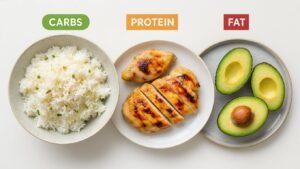
You don’t need to go zero-carb. Focus first on removing sugary drinks, sweets, and ultra-processed snacks, and lean toward whole foods — vegetables, legumes, whole grains, lean protein, and healthy fats. Research shows that choosing whole grains over refined grains specifically reduces the tendency to store visceral fat.
5. Protect Sleep and Manage Stress
Seven to nine hours of consistent sleep and some form of stress management aren’t optional extras here; both directly affect the insulin and cortisol levels that drive abdominal fat. They’re foundations, not afterthoughts.
For the full toolkit of insulin-lowering habits, see our detailed guide on how to lower insulin naturally, and to improve how your cells respond in the first place, our guide to improving insulin sensitivity naturally.
Frequently Asked Questions
Does insulin cause belly fat?
High insulin levels strongly promote fat storage, especially visceral (belly) fat, by switching your body into storage mode and blocking fat burning. But the relationship is bidirectional; belly fat also worsens insulin resistance, which raises insulin further. Insulin is a major driver, not the only cause.
How do I lower insulin to lose belly fat?
The most effective levers are regular exercise (especially strength training), walking after meals, spacing out your eating, cutting refined carbs and added sugar, and protecting your sleep. These lower circulating insulin which lets your body to access and burn stored fat.
Can you target belly fat specifically?
No, you can’t spot-reduce fat from one area. However, when you lower insulin and lose weight overall, studies show you tend to lose a higher proportion of visceral fat than fat elsewhere, so belly fat often responds well to these changes.
Why is visceral fat more dangerous than other fat?
Visceral fat is metabolically active. It releases inflammatory chemicals and free fatty acids that interfere with insulin signaling and raise the risk of type 2 diabetes, heart disease, and fatty liver, unlike subcutaneous fat, which is more inert.
It varies, but many people notice changes within 8–12 weeks of a consistent lifestyle change. Because belly fat is often lost preferentially when insulin drops, the abdomen can respond faster than people expect.
Three Myths Worth Clearing Up
Because insulin and belly fat are such a popular topic, a lot of half-truths circulate. Three worth correcting:
Myth: “Insulin alone makes you fat.” As covered above, it’s a two-way street. High insulin promotes fat storage, but excess visceral fat also drives insulin higher. Blaming insulin alone misses half the loop — and the half you can often influence fastest is the lifestyle side.
Myth: “You can burn belly fat with ab exercises.” Crunches strengthen the muscles under the fat, but don’t preferentially burn the fat on top of them. Spot reduction isn’t real. What works is lowering insulin and reducing fat overall, after which the belly tends to slim down on its own.
Myth: “If you take insulin for diabetes, it’s making you fat, and you should avoid it.” This one’s important and potentially dangerous. Some people with diabetes need insulin therapy for safe blood sugar control. Weight changes can occur, but that reflects insulin’s normal anabolic effects, not a reason to skip medication. Never adjust prescribed insulin without your doctor.
The Bottom Line
The relationship between insulin and belly fat comes down to a simple loop: high insulin stores abdominal fat, and abdominal fat keeps insulin high. Break the loop at any point through movement, smarter meal timing, fewer refined carbs, and better sleep, and you begin to unwind it. None of it is glamorous, but it’s the approach that genuinely works, and it’s the one I used to rebuild my own metabolic health.
Pick one change and start today. For the complete picture of how insu